
248
248
English lever escapement
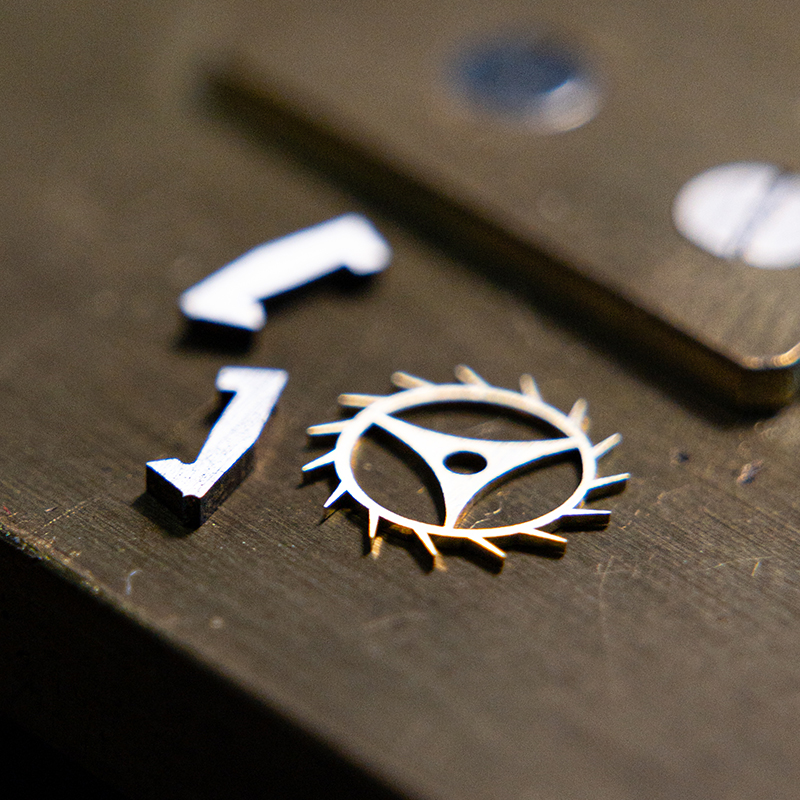
The English lever escapement is the commercialised adaptation truest to the first detached lever escapement invented by Thomas Mudge in 1754. The tooth shape varies to the later club-tooth lever in its fine ratchet-like form which is why it can also be referred to as the ratchet-tooth lever. The escapement layout is also different, with the pallets sitting at a right angle to the escape wheel.
Parachute shock setting
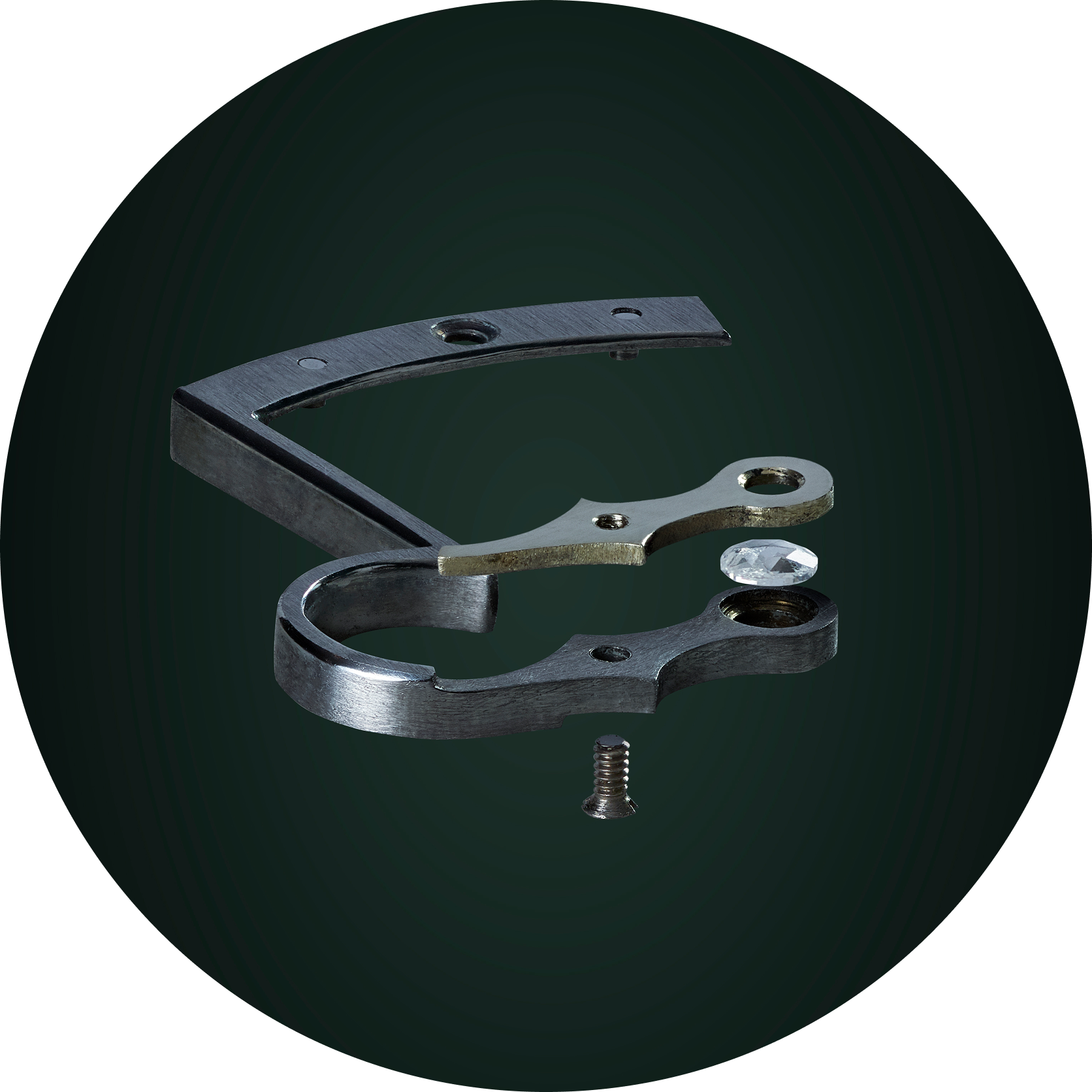
The first mechanism designed to protect the delicate balance pivots of a watch from damage if it is knocked or dropped was invented in around 1790 by Abraham-Louis Breguet. The name (originally pare-chute in Breguet’s native French) was inspired by the contemporary trials of Louis-Sébastien Lenormand who made the first public parachute jump and invented the name which roughly translates as ‘fall protection’.
Wolf’s teeth gearing
Horological wolf’s teeth are formed as a short, curved, ratchet with a thick root making them similar in appearance to the teeth of their namesake. Originally conceived in the 1770s, the principle was that they provided a stronger tooth form for the winding wheels which take the most pressure when a watch is fully wound. The design is now synonymous with fine watchmaking due to the added complexity their creation entails matched with their elegant appearance.