Train Jewels
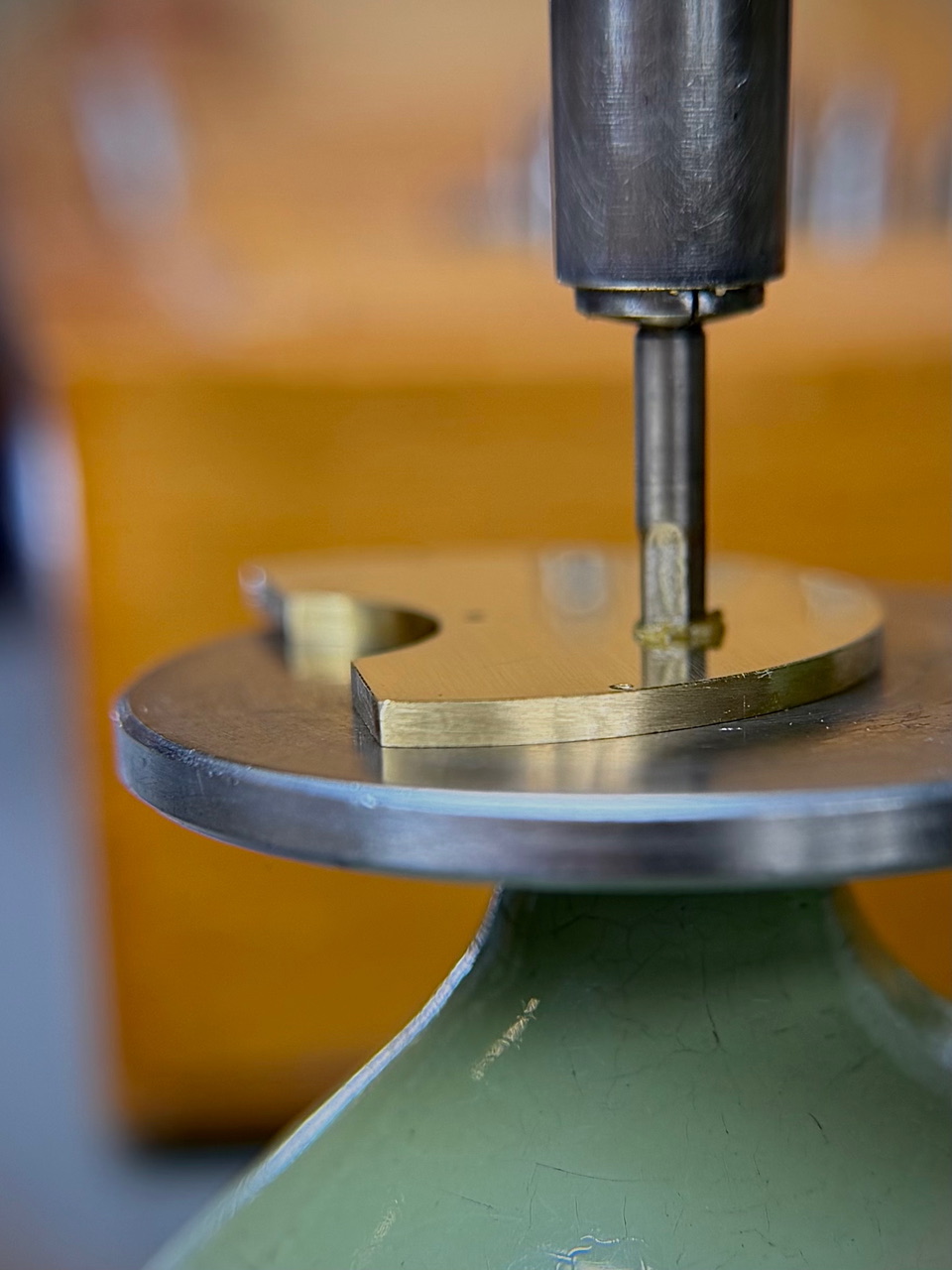
As summer draws to a close outside our workshop in the Staffordshire Moorlands we’ve turned our attention to a small and yet vital part of our watchmaking design process - curating the perfect train jewels for our 2nd Edition Project 248 watches.
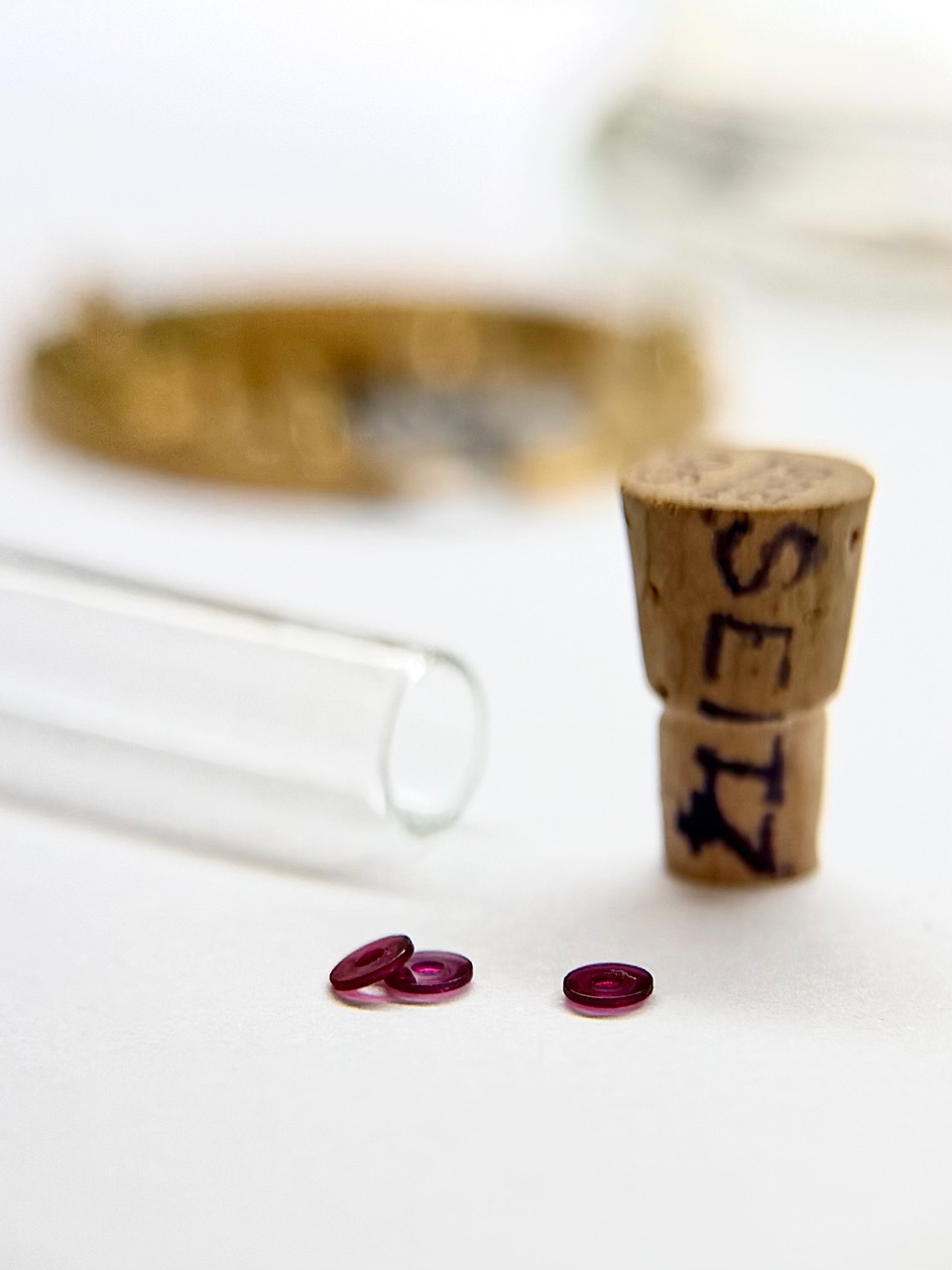
The first ruby pivot bearing for use in watches was created over 300 years ago by Nicolas Fatio de Duillier, Peter Debaufre, and Jacob Debaufre who patented their invention in 1704. Selected for its low friction and hard wearing nature, ruby jewels also happen to look beautiful giving them decorative potential beyond their physical properties.
While the internal hole of a jewel is determined by the pivot size, measuring fractions of a millimetre larger than the pivot to give it a little wiggle room (known as ’side shake’ in the trade), the external diameter can be a design choice.
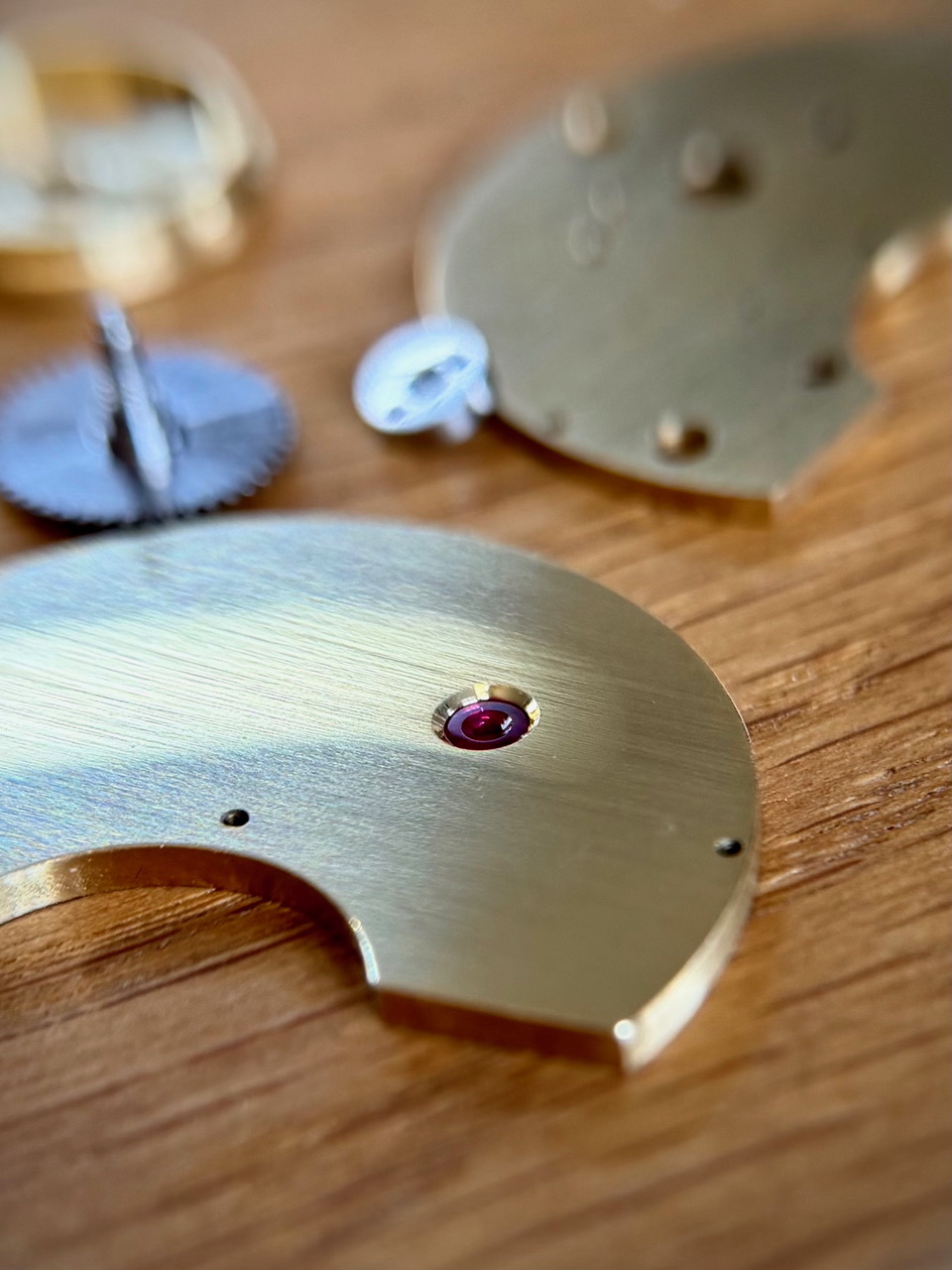
Larger jewels act as little windows into the movement that reveal a glimpse of the parts rotating beneath them. For that reason, we love to balance larger diameter jewel sizes where the design of the plates allows. We carefully select each jewel size to maximise the aesthetics whilst ensuring they continue to perform their vital engineering function. We test our designs on dummy plates like the one in this photograph to get the pattern of sizes just right before we start fitting them into our final calibres.